Hello everyone! If you’ve ever watched a home improvement show or scrolled through inspiring DIY projects online, you know the feeling: a mix of excitement and perhaps a little intimidation. Many aspiring DIYers dream of transforming their spaces, hanging beautiful wall art, or tackling a fresh coat of paint, but often feel held back by the perceived complexity of tools or a lack of experience. It’s a common misconception that you need a garage full of heavy-duty power tools and years of experience to start making a real difference in your home.
The good news, as Kristen shared in the video above, is that this simply isn’t true. Getting started with home improvement is more accessible than you might think, especially when you have the right beginner DIY tools. As a self-taught DIYer herself, Kristen brilliantly demonstrates how to achieve impressive results using simple, beginner-friendly equipment, proving that you can accomplish a great deal without diving headfirst into the world of advanced machinery. This guide expands on her recommendations, offering deeper insights into these essential tools and why they are perfect for anyone ready to embrace their inner home renovator.
Manual Cutting: Precision Without the Power
One of the first hurdles many face in DIY is cutting materials accurately, especially wood trim or molding. The thought of a loud, powerful saw can be daunting. Thankfully, there are excellent manual alternatives that offer precision and control.
The Affordable Angle Master: Miter Box and Hand Saw
As Kristen highlighted, a miter box and hand saw set is a game-changer for any beginner. Priced incredibly affordably, often around just $10, this duo allows you to make precise cuts for various trim and molding projects. Unlike a power saw, which requires significant practice and can be intimidating, the hand saw combined with a miter box offers a much gentler learning curve. The miter box itself features pre-set notches, commonly allowing cuts at crucial angles like 90 degrees (for straight cuts), 22.5 degrees, and 45 degrees (perfect for creating seamless corners on picture frames or baseboards). This means you don’t have to worry about measuring angles manually; the tool guides your cut, ensuring consistent results.
This setup is ideal for installing picture frame molding, cutting baseboards, or working with any single piece of trim that is relatively easy to saw through. While it does require a bit of manual effort, the sense of accomplishment from accurately cutting your own trim pieces is incredibly rewarding. It empowers you to take on projects independently, removing the need to rely on others for custom cuts. Always remember to secure your material firmly within the miter box and maintain a steady hand for the best results, prioritizing safety above all else.
Quick Cuts for Small Trim: Miter Shears
For even smaller, lighter trim pieces, miter shears are an absolute must-have addition to your collection of essential DIY tools. Kristen aptly describes them as “big, heavy-weight scissors,” which is an excellent way to visualize their function. These shears streamline the process of making angled cuts on thin molding, especially popular for decorative wall trim or small cabinet accents. Their primary advantage lies in their speed and ease of use; you can quickly snip through trim without needing to set up a miter box or use a saw.
Miter shears typically come with an adjustable angle guide, allowing you to pivot to your desired degree, most commonly 45 degrees for perfect corner joints. They are particularly effective for delicate tasks where precision is paramount, such as finishing touches on picture frames or adding intricate details to cabinetry. While they won’t cut through thick wood, for lightweight plastic, PVC, or very thin wooden molding, miter shears are incredibly efficient, helping you achieve professional-looking results with minimal effort and without any power requirements.
Painting Smarter, Not Harder
Painting is one of the most transformative home improvement projects, but it can also be physically demanding and messy without the right equipment. These tools are designed to make your painting tasks smoother and more efficient.
Reaching New Heights: The Extendable Paint Roller Stick
If you’re planning any significant wall painting, especially floor-to-ceiling projects, an extendable roller stick is an indispensable tool. As Kristen points out, she won’t paint a room without one, and for good reason. These sticks typically extend from about 2 feet to 4 feet, though longer versions are available, allowing you to comfortably reach the highest points of your walls and easily roll paint down to the baseboards. This eliminates the constant bending and stretching, and often the need for a ladder, saving your back and knees considerable strain.
Beyond comfort, an extendable roller ensures more consistent and even paint application across large surfaces. It helps you maintain a steady pressure, preventing streaks and patchy areas. When choosing one, consider the length that best suits your home’s ceiling height and your own comfort. Look for models with comfortable grips and sturdy locking mechanisms to keep the extension secure. Pairing it with the right roller cover (e.g., short nap for smooth walls, longer nap for textured surfaces) will guarantee a professional-looking finish with remarkable speed and ease, truly one of the top beginner DIY tools.
Your Precision Partner: Painter’s Tape
Painter’s tape is far more versatile than its name suggests, making it a staple in nearly every DIY project, not just painting. Kristen correctly identifies it as the perfect temporary tool for planning and visualizing. For painting, its primary role is creating crisp, clean lines and protecting surfaces you don’t want painted, such as trim, ceilings, or adjacent walls. Applying it properly, pressing down firmly to seal the edges, is key to preventing paint bleed.
However, its utility extends significantly beyond this. Painter’s tape is excellent for temporarily holding items in place while you mark drilling spots or test layouts for wall art. If you’re planning a gallery wall or a complex trim design like picture frame molding, taping out the arrangement beforehand allows you to adjust and visualize without making permanent marks or holes. Different types of painter’s tape are available for various surfaces, from delicate surfaces that require low adhesion to tapes designed for masking large outdoor areas. Keeping a roll handy helps you avoid costly mistakes and ensures your projects are well-planned and executed with precision.
Effortless Wall Hanging & Securing
Hanging items on walls can be intimidating, especially if you’re worried about damaging drywall or if the item is heavy. These innovative tools simplify the process.
Tool-Free Wall Art: 3M Drywall Picture Hangers
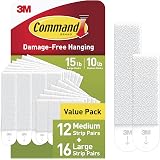
For quick and easy wall hanging without the need for drills or complex tools, 3M drywall picture hangers (often referred to as claw hangers) are revolutionary. These ingenious devices simply press into your drywall, creating a secure hold without requiring you to hit a stud. They come with convenient markers to help you pinpoint exact placement, ensuring your items are hung perfectly level and spaced.
The hangers are available in various weight capacities, from 25-pound claws suitable for smaller pieces to robust 65-pound claws that Kristen used for a full-wall mirror. This eliminates the common fear of trying to locate a stud, which can often be elusive. Just make sure to match the hanger’s weight capacity to your item’s weight. They cling securely to the drywall, providing surprising strength and stability, making wall décor projects much less daunting for any beginner DIYer.
The Magnetic Marvel: The StudBuddy Stud Finder
While 3M hangers are great for many items, some installations, like mounting a TV, hanging heavy shelves, or securing curtain rods, absolutely require finding a stud for structural support. The StudBuddy is a remarkably simple and effective solution. Unlike electronic stud finders that can sometimes be inconsistent or confusing with their lights and beeps, The StudBuddy operates purely on magnetism.
This large magnet glides across your wall until it ‘magnetizes’ to a screw or nail head embedded in a stud. Its unique advantage is that it sticks directly to the wall where it finds the stud, leaving your hands free to mark the spot. This hands-free convenience makes it incredibly user-friendly for beginners. It’s a reliable, straightforward tool that takes the guesswork out of locating studs, ensuring your heavy installations are mounted safely and securely.
The Finishing Touch: Caulking Gun
A caulking gun is essential for achieving professional-looking finishes and sealing gaps throughout your home. This simple device holds tubes of caulk, Liquid Nails, or other sealants, allowing you to dispense them evenly and precisely. It’s invaluable for filling unsightly gaps in trim work, sealing around bathtubs or sinks to prevent water damage, or even using Liquid Nails to adhere items without screws.
The caulk gun’s mechanism ensures a steady flow of product, making it easy to create smooth, consistent beads. For any crown molding, baseboards, or window trim, a good caulk job can transform an otherwise good installation into a truly seamless and polished look. It’s an indispensable tool for protecting your home from moisture and giving your DIY projects a refined, complete appearance.
Stepping into Power Tools: Beginner-Friendly Options
While many projects can be done manually, some tasks are significantly easier and quicker with a bit of power. These power tools are known for their ease of use and are excellent starting points for beginners.
Your First Power Tool: Cordless Drill & Electric Screwdriver
For many, a cordless drill is the first power tool they embrace, and Kristen’s journey reflects this. If the idea of a drill still feels intimidating, an electric screwdriver is a fantastic stepping stone. These lightweight, handheld devices perform smaller fastening tasks effortlessly, giving you a feel for controlled power. Once comfortable, graduating to a cordless drill opens up a world of possibilities.
A cordless drill is incredibly versatile, allowing you to quickly drive screws, drill pilot holes for hanging, assemble furniture, and install everything from curtains to blinds and wall art. Kristen recommends getting comfortable with it by practicing on a scrap piece of wood to understand its power and control. Modern cordless drills are not overly powerful to the point of being uncontrollable; they are designed for ease of use and safety. Look for a lightweight model with variable speed settings for maximum control. Mastering the cordless drill is a significant step, enabling you to tackle a vast array of home improvement projects with confidence.
Smooth Operator: The Orbital Sander
Refinishing projects, like sanding down old furniture, railings, or doors, can be incredibly time-consuming and labor-intensive by hand. An orbital sander dramatically speeds up this process, making it enjoyable rather than a chore. As Kristen shared, she used hers to sand an entire staircase railing and newel posts – a task that would take days or weeks manually.
Despite being a power tool, orbital sanders are surprisingly lightweight, cordless, and very easy to operate. You simply attach a sanding sheet (which typically has a hook-and-loop backing), hold the tool, and press a button. The circular and orbital motion does all the hard work, quickly and smoothly preparing surfaces for painting or staining. There’s no complex technique involved, making it one of the most beginner-friendly power tools. Different grits of sandpaper (coarse for heavy material removal, fine for smooth finishing) can be swapped out easily, adding to its versatility. It’s a tool that truly saves time and effort on many resurfacing projects.
Fastening Finishes: Cordless Brad Nailer
For any trim work, such as installing baseboards, crown molding, or door and window casing, a cordless brad nailer is a game-changer. This tool allows for quick, secure, and precise fastening of trim pieces, creating a much cleaner look than traditional hammering. While it might look intimidating, as Kristen noted, modern brad nailers are designed with user-friendliness and safety in mind.
They are handheld, lightweight, and cordless, offering excellent maneuverability. Safety features, such as a contact trip that prevents firing unless pressed against a surface, are standard. For beginners, practicing on scrap wood in a hidden area, as Kristen did, is an excellent way to get comfortable with its feel and operation. Brad nailers use thin nails (brads) that leave small holes, which are easy to fill and conceal, contributing to a professional finish. Being able to quickly and securely attach trim transforms the aesthetic of any room, making this one of the most rewarding beginner DIY tools for finish carpentry.
The All-in-One Starter Kit: A General Tool Bag
Finally, to ensure you’re always prepared for unexpected tasks or to supplement your specialized tools, a general tool bag is invaluable. Instead of individually sourcing basic items, many brands offer comprehensive starter kits that contain a variety of essential hand tools. Kristen mentioned a kit that typically includes a hammer, a measuring tape, a range of screwdriver sizes, a wrench, and even an X-Acto knife.
Having a ready-to-go bag filled with these foundational tools means you’re equipped for nearly any minor home repair or adjustment. From tightening loose screws to measuring for new furniture or opening packages, these everyday essentials will consistently come in handy. Investing in a quality starter kit ensures you have the fundamental building blocks of any successful DIY endeavor readily accessible, empowering you to tackle those smaller projects with confidence before you even consider adding more specialized beginner DIY tools to your arsenal.
Hammer Out Your Beginner Tool Questions
Do I need a lot of expensive tools to start DIY projects?
No, you don’t need a garage full of heavy-duty power tools or years of experience. Many home improvement tasks can be accomplished with simple, beginner-friendly equipment.
What is a good tool for making accurate cuts on wood trim as a beginner?
A miter box and hand saw set is an affordable and precise option for beginners. It features pre-set angles to help you make clean cuts for trim and molding projects.
What is a good first power tool for DIY beginners?
A cordless drill is an excellent first power tool due to its versatility. It helps you quickly drive screws, drill pilot holes, and assemble furniture with ease.
How can I hang items on a wall without needing to find a stud?
You can use 3M drywall picture hangers, also known as claw hangers. These press securely into the drywall and can hold various weights without a stud.